
Previously published on Minkai.art

In the last post we talked about a shapeshifting creature, the kitsune onna (狐女, きつねおんな, lit. “fox women”). We also mentioned that foxes weren’t the only animal capable of changing their appearance, like the Japanese raccoon-dog, the tanuki (狸, タヌキ). They are nocturnal mammals similar to raccoons and possums and they live in close contact with humans. Their mythological counterparts, the bake-danuki (化け狸, ばけだぬき), are known tricksters and shapeshifters, who enjoy fooling unaware people.
Mentions of these creatures can be dated back to the XIII century, appearing as mischievous and almost comical characters, a link between the living and the spirit world. For this reason, in folklore they appear as yōkai (妖怪, ようかい), supernatural spirits.
Tanuki in ancient legends and art
The first mention of a shapeshifting creature dates back to the year 720 a.D., in the second oldest Japanese book, the Nihon Shoki (日本書紀, にほんしょき, The Chronicles of Japan). Here we can find the mujina (貉, ムジナ), similar in look and magical powers to a tanuki.
However, it is in Kamakura period (1185 / 1333) legends that this character developed in the creature that we now know. As we can see in Gleanings from Uji (宇治拾遺物語, うじしゅういものがたり, Uji Shūi Monogatari) the animal appears to a monk and a hunter as a bodhisattva riding his heavenly white elephant, in order to deceived them.
The most famous tanuki story, anyhow, is The Lucky Tea-kettle ( 分福茶釜, ぶんぶくちゃがま, Bunbuku Chagama), in which a tinsmith captures a monk’s raccoon-dog and sells it as a fake tea-kettle. Put on the fire, the tanuki would revert back to its original form, running back to the man, just to be sold again for riches.
In Katsushika Hokusai’s painting, The Tea-Kettle Raccoon: Painting Executed Upside Down from Boston Museum of Fine Arts, we can see the animal seated near said kettle while dressed as a monk. This is one of the most common iconographies, as the tanuki was known to trick people by pretending to be a priest asking for offerings.

Tanuki in modern society and pop culture
Interestingly, today the tanuki has taken up the role of a benefactor. Similar to the maneki neko (招き猫, まねきえこ, lit. “beckoning cat”), we can often see it depicted as ceramics statues outside restaurants and houses. Usually, it is represented standing upright like a large-bellied man with a sake barrel on its shoulders, obsessing over food and drinks. It wears a straw hat and has prominent genitals, called kinbukuro (金袋, きんぶくろ, lit. “money bags”).
According to the traditions rubbing them brings luck and money. A funny nursery rhyme chants:
The tan tan tanuki’s genitals
Even if there’s no wind
They spin spin
たんたん狸の金玉は
風もないのに
ぶらぶら
Tan tan tanuki no kintama wa
Kaze mo nai no ni
Bura bura
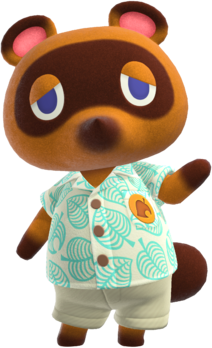
In pop culture this yōkai became quite famous, also thanks to Nintendo characters like Mario, who can wear a “Tanooki Suit” that gives him the ability to attack enemies and shapeshift into a statue, or Tom Nook from the Animal Crossing franchise. Called Tanukichi in the original Japanese version, his name is a pun about being a stingy tanuki, kechi (ケチ) in Japanese.

References
DE WAAL Edmund / FAULKNER Rupert / IRVINE Gregory / JACKSON Anna / VAN ASSHE Annie, Timeless Beauty. Traditional Japanese Art, Skira, 2002 Milano
FOSTER Michael Dylan, The Book of Yōkai. Mysterious Creatures of Japanese Folklore, University of California Press, 2015 Berkley
Mingei: Arte Popolare in Giappone. Una Collezione Privata, Galleria Gottardo, 1990 Lugano [in italian]
WINZELER Robert, Anthropology and Religion. What we Know, Think, and Question, AltaMira Press, 2012 Lanham


